

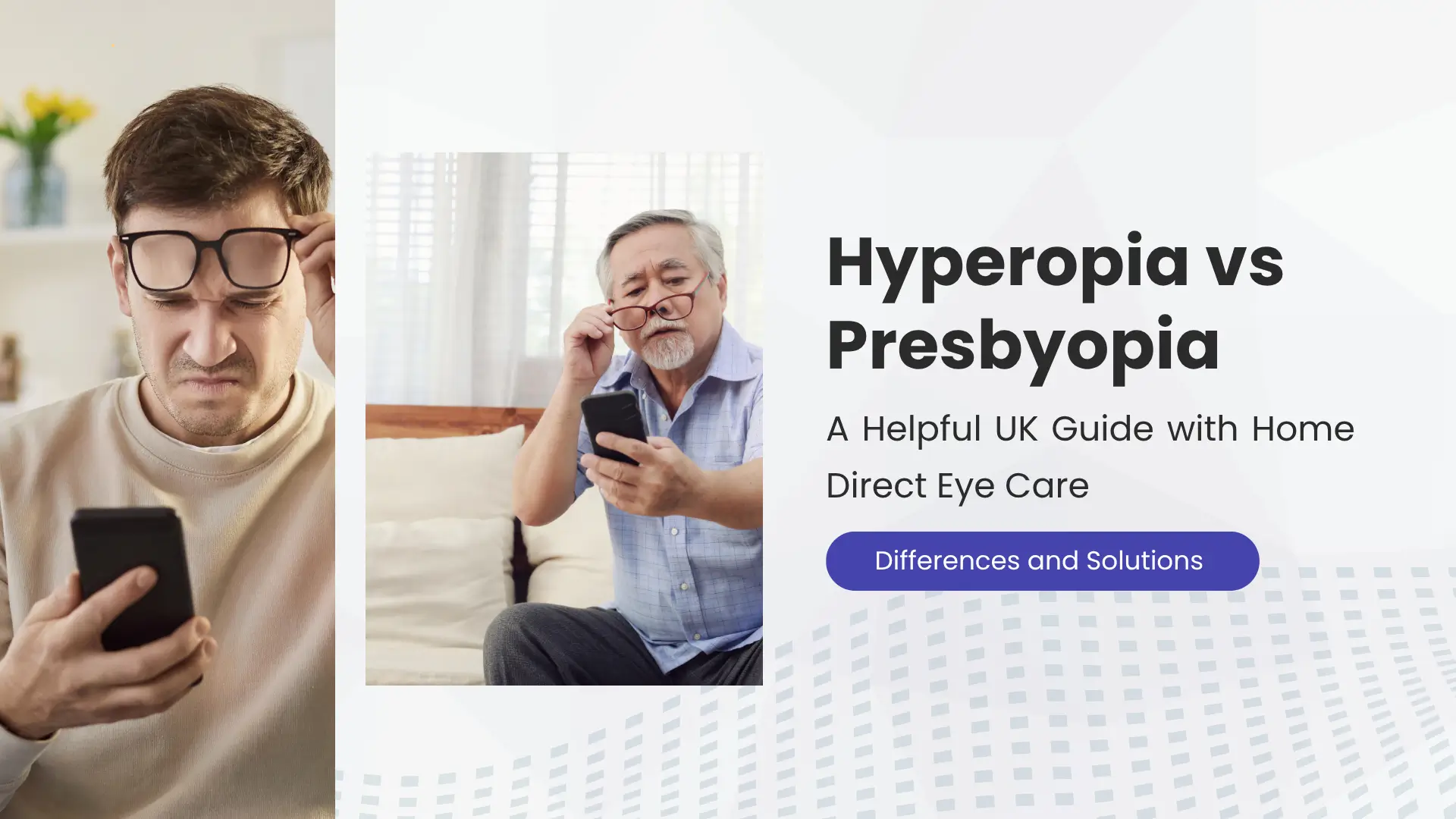
Most people don’t notice their eyesight changing all at once. It starts subtly: holding your phone a little farther away, increasing the brightness on your tablet, or struggling to read medication labels that once seemed perfectly clear. These everyday moments often make people wonder whether their eyes are simply tired… or if something more is going on.
For many adults in the UK — especially those aged 40 and above — two common conditions come into focus: hyperopia (long-sightedness) and presbyopia (age-related near vision difficulty). They sound similar, and both affect near vision, but the reasons behind them are very different. Understanding these differences helps you recognise symptoms earlier, find the right solutions, and protect your long-term eye health.
This is where Home Direct Eye Care makes life easier. Instead of travelling to an optician’s practice, you can receive professional eye testing at home, carried out by qualified mobile opticians who bring the full service straight to your doorstep. Whether you’re elderly, living with reduced mobility, or simply prefer the comfort of your own home, their service ensures that expert care is always within reach.
Visit: https://homedirecteyecare.com/
Understanding the Basics: What Are Hyperopia and Presbyopia?
Hyperopia and presbyopia often get mixed up because they both make near tasks — reading, sewing, smartphone use — more difficult. But the underlying causes and solutions differ.
Think of hyperopia as a “shape-based” focusing problem, while presbyopia is an “age-based” flexibility problem.
Let’s break them down clearly and calmly.
Hyperopia (Long-Sightedness): What It Really Means
Hyperopia happens when the shape of your eye makes it harder to focus on close objects. The eyeball may be slightly shorter than average, or the cornea may curve less than it should. Because of this, light focuses behind the retina instead of directly on it, leading to blurry near vision.
Common symptoms of hyperopia
Readers in the UK often notice:
• Blurry text when reading up close
• Eye strain after using screens
• Difficulty focusing on small print
• Headaches after long periods of close work
• Occasionally blurry distance vision in higher degrees of hyperopia
Hyperopia isn’t caused by age — people can be born with it and often have it from childhood or early adulthood.
How hyperopia is treated
A pair of prescription glasses is usually the simplest and most effective fix. Once the optical power is corrected, near vision becomes much more comfortable.
If you book a home eye test with Home Direct Eye Care, their mobile optician will check for hyperopia using the same advanced equipment found in high-street practices, but with the added comfort of being in your living room.
Presbyopia: The Natural Age-Related Change
Presbyopia is something everyone experiences eventually, usually beginning around the age of 40. It has nothing to do with the shape of the eye. Instead, it’s caused by the gradual stiffening of the eye’s internal focusing lens, which loses flexibility over time.
When the lens becomes less able to change shape, near vision tasks become more difficult.
Common symptoms of presbyopia
People often notice:
• Holding reading material further away
• Needing more light for close work
• Blurry vision when switching from near to far
• Difficulty reading in dim or warm lighting
• Eye fatigue after short reading sessions
Unlike hyperopia, presbyopia happens to everyone as part of the natural ageing process.
How presbyopia is treated
There’s no way to stop the lens from stiffening, but the effects can be managed with the right eyewear. A home-visit optician from Home Direct Eye Care can prescribe:
• Reading glasses
• Bifocals
• Varifocals
• Task-specific lenses (ideal for hobbies or work)
Their mobile service makes the process easy for older adults, especially those who may find travelling challenging.
Hyperopia vs Presbyopia: Key Differences in Simple Terms
Here’s the easiest way to understand it:
• Hyperopia can happen at any age — it’s about the eye’s shape.
• Presbyopia happens with age — it’s about the lens losing flexibility.
Think of hyperopia as a camera that was built slightly out of alignment, and presbyopia as a camera lens that gradually becomes less adjustable over time.
Both conditions affect near vision — but for completely different reasons. And importantly, they can occur together. Many people over 40 with hyperopia may feel their symptoms worsen as presbyopia begins, which makes regular eye tests essential.
Why Early Detection Matters
Ignoring near-vision problems often leads to:
• Headaches
• Eye strain
• Reduced reading ability
• Difficulty managing medications
• Increased risk of falls in older adults
• Problems with day-to-day tasks
A home eye test UK service like Home Direct Eye Care ensures issues are found early and treated professionally.
The Benefits of a Home Eye Test with Home Direct Eye Care
Home Direct Eye Care was created with one mission: to make quality eye care accessible, especially for people who struggle to attend in-practice appointments.
Whether you’re elderly, living with limited mobility, or caring for someone with additional needs, their service is designed to bring comfort, convenience, and clinical expertise straight to your doorstep.
Here’s what makes their home optician services stand out:
A complete eye examination — right in your home
Their mobile opticians bring specialised equipment to test:
• Your vision
• Your prescription
• Eye pressure
• Eye health (including checks for cataracts, glaucoma and diabetes-related changes)
Perfect for elderly and home-bound individuals
Not everyone can travel easily. A home visit eliminates:
• Long journeys
• Waiting rooms
• Accessibility concerns
• Missed appointments due to mobility issues
Warm, patient-centred care
The opticians take their time, explaining everything clearly. Many elderly patients find the relaxed home setting far more comfortable and reassuring.
Support for people with learning disabilities or autism
Home Direct Eye Care offers specialised services for adults with autism or learning disabilities, including visits to day centres. You can learn more here:
https://homedirecteyecare.com/eye-tests-for-adults-with-autism-and-learning-disabilities-at-day-centres-2/
How to Tell Whether You Have Hyperopia or Presbyopia
Because the symptoms overlap, guessing isn’t helpful. A proper eye examination is the only reliable way to tell.
Here’s a simple step-by-step self-check you can try at home:
This isn’t a substitute for a real eye test, but it can guide you to the right decision.
- Check your reading distance
If you naturally push reading material far away, presbyopia may be developing. - Try reading with one eye closed
If vision improves significantly, you may have hyperopia in one eye. - Notice when the blurriness occurs
• Blurred near vision at any age → possible hyperopia
• Blurred near vision after age 40 → likely presbyopia - Pay attention to lighting
Needing significantly more light often signals presbyopia.
If any of these sound familiar, a free NHS home eye test may be available to you.
Check your eligibility here:
https://homedirecteyecare.com/nhs-eligiblity/
Who Qualifies for a Free NHS Home Eye Test?
Many people in the UK qualify without even realising it. Home Direct Eye Care makes the process simple by checking eligibility during the booking call.
You may qualify if you:
• Are aged 60 or above
• Have certain medical conditions
• Receive specific benefits
• Are housebound or unable to leave your home without assistance
Full details are available here:
https://homedirecteyecare.com/nhs-eligiblity/
Their team will guide you through everything step-by-step, ensuring you receive the support you’re entitled to.
Checklist: When You Should Book a Home Eye Test
Use this simple checklist to stay on top of your eye health.
You should consider a home optician visit if you:
✔ Struggle to read books, labels or phone screens
✔ Push text further away to see it clearly
✔ Experience headaches after reading
✔ Have difficulty managing medications
✔ Notice colours or contrast becoming faint
✔ Are aged 40 or above
✔ Have mobility issues or health conditions that make travel difficult
✔ Care for someone who cannot attend a clinic easily
✔ Want professional care in a calmer, familiar environment
If any of these apply, a home eye test is not just helpful — it’s important for your long-term safety and comfort.
Solutions Offered by Home Direct Eye Care
Once your mobile optician identifies whether your symptoms stem from hyperopia, presbyopia, or a combination of both, you’ll receive personalised solutions.
1. Tailored glasses prescriptions
Their opticians can prescribe:
• Reading glasses
• Distance glasses
• Varifocals
• Bifocals
• Computer or hobby-specific glasses
Every solution is explained clearly to help you feel confident in your vision.
2. Advice on lighting and reading setup
Simple changes such as brighter lighting, using matte surfaces, and positioning reading materials can significantly improve comfort.
3. Ongoing support
You’re never left on your own. Home Direct Eye Care continues to support you with adjustments, follow-ups, and future eye tests — all from home.
FAQs: Hyperopia, Presbyopia, and Home Eye Tests
Is presbyopia reversible?
No. It’s a natural part of ageing, but the symptoms can be managed easily with the right lenses.
Can someone have both hyperopia and presbyopia?
Yes, it’s common — especially after age 40. That’s why regular eye tests are essential.
Can a home eye test check for serious eye conditions?
Yes. Home Direct Eye Care examines overall eye health, including checks for cataracts, glaucoma, and diabetic eye changes.
What if I care for an elderly parent?
A home visit is perfect. The opticians are patient, friendly, and experienced in helping older adults feel at ease.
Is a home eye test as accurate as in-practice testing?
Absolutely. Home Direct Eye Care brings advanced, portable equipment to ensure accurate results.
Bringing Clarity to Your Vision — Without Leaving Home
Hyperopia and presbyopia affect millions across the UK, but with the right understanding and support, both conditions are manageable. What matters most is receiving regular, high-quality eye care — especially as you age or if travelling is difficult.
Home Direct Eye Care removes every barrier by bringing expert opticians straight to your doorstep. Warm, professional, and dedicated to your comfort, their service ensures that looking after your eyes is easier than ever.
If you’re noticing changes in your vision — or if you care for someone who may be struggling — now is the perfect time to take action.
Book Your Free NHS Home Eye Test Today
Experience the comfort, convenience, and reassurance of professional eye care at home.
Visit https://homedirecteyecare.com/ to book your free NHS home eye test and enjoy personalised vision care delivered directly to your door.
Better clarity, greater comfort, and healthier eyes — all from home.